
- Remove the current class from the content27_link item as Webflows native current state will automatically be applied.
- To add interactions which automatically expand and collapse sections in the table of contents select the content27_h-trigger element, add an element trigger and select Mouse click (tap)
- For the 1st click select the custom animation Content 27 table of contents [Expand] and for the 2nd click select the custom animation Content 27 table of contents [Collapse].
- In the Trigger Settings, deselect all checkboxes other than Desktop and above. This disables the interaction on tablet and below to prevent bugs when scrolling.
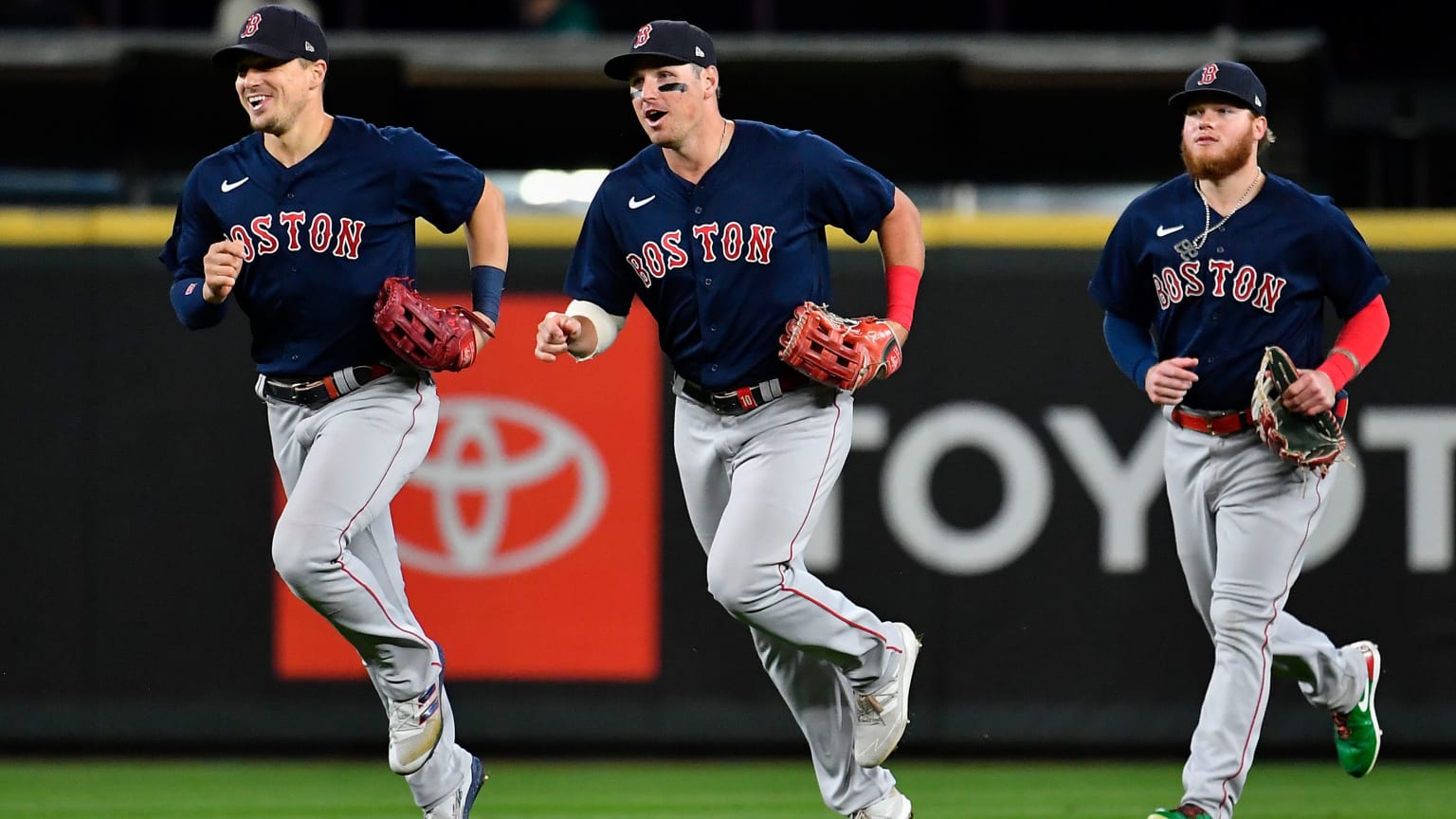
Ricky De Luna, a former Speed Researcher and S&C coach for the Boston Red Sox, describes the limitations of traditional strength and conditioning (S&C) models in Major League Baseball.
His role, focused on integration, was born from a fundamental problem: getting athletes "stronger and faster" in the weight room often fails to transfer to game-day performance. The ultimate goal, he states, was "bridging the gap with S&C and then our skills department".
The issue, according to De Luna, is a lack of objective confirmation. When a player improves their power output on a force plate, it "doesn't always mean that they're expressing that in the game". This is where the Red Sox organization found a competitive advantage with a specialized role, a position De Luna notes is "very unique to the Red Sox" and "the only position that exists in professional baseball where an S&C coach is specialized in speed and then for speed research to happen".
Reverse-Engineering Performance Deficiencies
De Luna’s research approach was aggressively data-driven, involving constant conversations with the analytics department to understand "what is game data telling us that we need to do better at as a team?".
He offers a pointed example: an athlete who is excellent at "base running advancement" (running from first to third) but whose "base stealing is his limiting factor". The problem is not strength; the problem is movement efficiency.
If base stealing is the limitation, De Luna "reverse engineers" the problem and zooms in on "first step for initial acceleration mechanics". This is where simple timing gates fall short, as they provide only "an end result without actually looking at how they got that end result".
Vue Motion: The Objective Weapon Against Guesswork
De Luna utilized Vue Motion to uncover the granular mechanical issues that simple timing gates or even the human eye miss. The technology provides the objective measurables needed to make confident decisions in a professional environment.
For instance, investigating that first step reveals:
- Asymmetry: "are they asymmetrical when it comes to projecting left versus right"
- Mobility Limitations: Are they limited "with hip flexion or hip extension"
"Now that I have something that gives me those measurables, something that's objective, now I know with more confidence what I need to do from an S&C standpoint". This objective certainty removes guesswork and allows De Luna to direct the weight room or medical department precisely: "we need to try to get this guy more range with his left hip versus right because this is what we're seeing that he's limited on".
The true competitive difference, De Luna insists, is the validation process. The mechanical improvements seen in VueMotion reports must be confirmed by "game data or game footage, right?". By linking Vue Motion's objective kinematics to measurable improvements in game metrics (like split times to second base), the organization ensures there is "transference happening".
"The more the more information that you have that's digestible and you could relay that over to the players or the skills coaches, the better you're just in a better position as a coach to have an impact," De Luna argues. For the Red Sox, Vue Motion was not just another tool; it was the essential bridge required to translate physical potential into actual on-field dominance.