

- Remove the current class from the content27_link item as Webflows native current state will automatically be applied.
- To add interactions which automatically expand and collapse sections in the table of contents select the content27_h-trigger element, add an element trigger and select Mouse click (tap)
- For the 1st click select the custom animation Content 27 table of contents [Expand] and for the 2nd click select the custom animation Content 27 table of contents [Collapse].
- In the Trigger Settings, deselect all checkboxes other than Desktop and above. This disables the interaction on tablet and below to prevent bugs when scrolling.
According to Ricky De Luna, former Speed Researcher and S&C coach for the Boston Red Sox, the secret to improving speed and reducing injury in professional baseball lies in two fundamental concepts: shapes and patterns.
In a sport already saturated with data, De Luna’s approach was to "simplify it" and make speed development "very digestible" for athletes.
Why Shapes and Patterns Matter More Than Data
De Luna acknowledges the immense pressure on MLB players: "You have to take in consideration that these baseball players have so much data. There's so much noise pollution when it comes to baseball." Furthermore, he argues, "your money's made on the mound or in the box when you're hitting or when you're pitching," meaning speed work can often be deprioritized.
However, he offers a crucial counter-argument: "you got to be healthy to be in that box or on the mound longer". And for players to get from point A to point B "safer and more efficiently," they "need to produce good shapes, you need to produce good patterns".
Defining the Core Concepts
De Luna’s method of communication broke down complex sprint mechanics into straightforward, visual terms:
1. Shapes (The Screenshot)
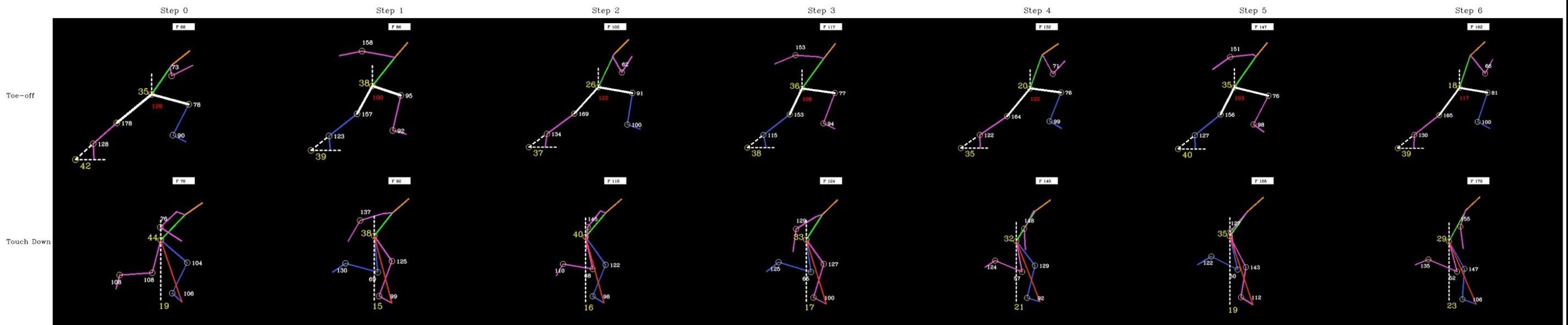
De Luna defines a shape simply: "a shape is just a screenshot of a specific set of figures that your arms and legs create".
In the Red Sox organization, all position players, from Major League down, "understand the frames," knowing "what figure should be happening within each frame of a kinogram". These crucial moments are referred to as KPI positions, or "Key Position Indicators that you need to be in".
The goal is for the player to "know what those positions feel like".
2. Patterns (The Transition)
If a shape is a screenshot, a pattern is the sequence connecting those screenshots. De Luna defines patterns as "how you get from one pattern or one shape to the next shape". In other words, how the player cycles from one body figure to the next.
The Altis Method: Drill Categorization
To teach these concepts, De Luna followed a methodology, often associated with Altis, that uses specific drill categories to address each component. This provides players with a tangible method for improvement:
- For Shapes: Drills like "switches or marches" help players "understand" and create a mental note of the shape.
- For Patterns: Drills like "dribbles" help players "understand the feeling of those patterns" and feel the transition from one shape to the next.
By categorizing drills this way, the process is digestible and easy for players, allowing them to focus on "shapes [and] what are they? Patterns [and] what do they feel like?".
The result is a method that not only improves speed but leverages better foot-ground interactions to influence running efficiency.
Want to understand how you can test, analyze and improve your shapes and patterns, get in touch.