
- Remove the current class from the content27_link item as Webflows native current state will automatically be applied.
- To add interactions which automatically expand and collapse sections in the table of contents select the content27_h-trigger element, add an element trigger and select Mouse click (tap)
- For the 1st click select the custom animation Content 27 table of contents [Expand] and for the 2nd click select the custom animation Content 27 table of contents [Collapse].
- In the Trigger Settings, deselect all checkboxes other than Desktop and above. This disables the interaction on tablet and below to prevent bugs when scrolling.
Overview
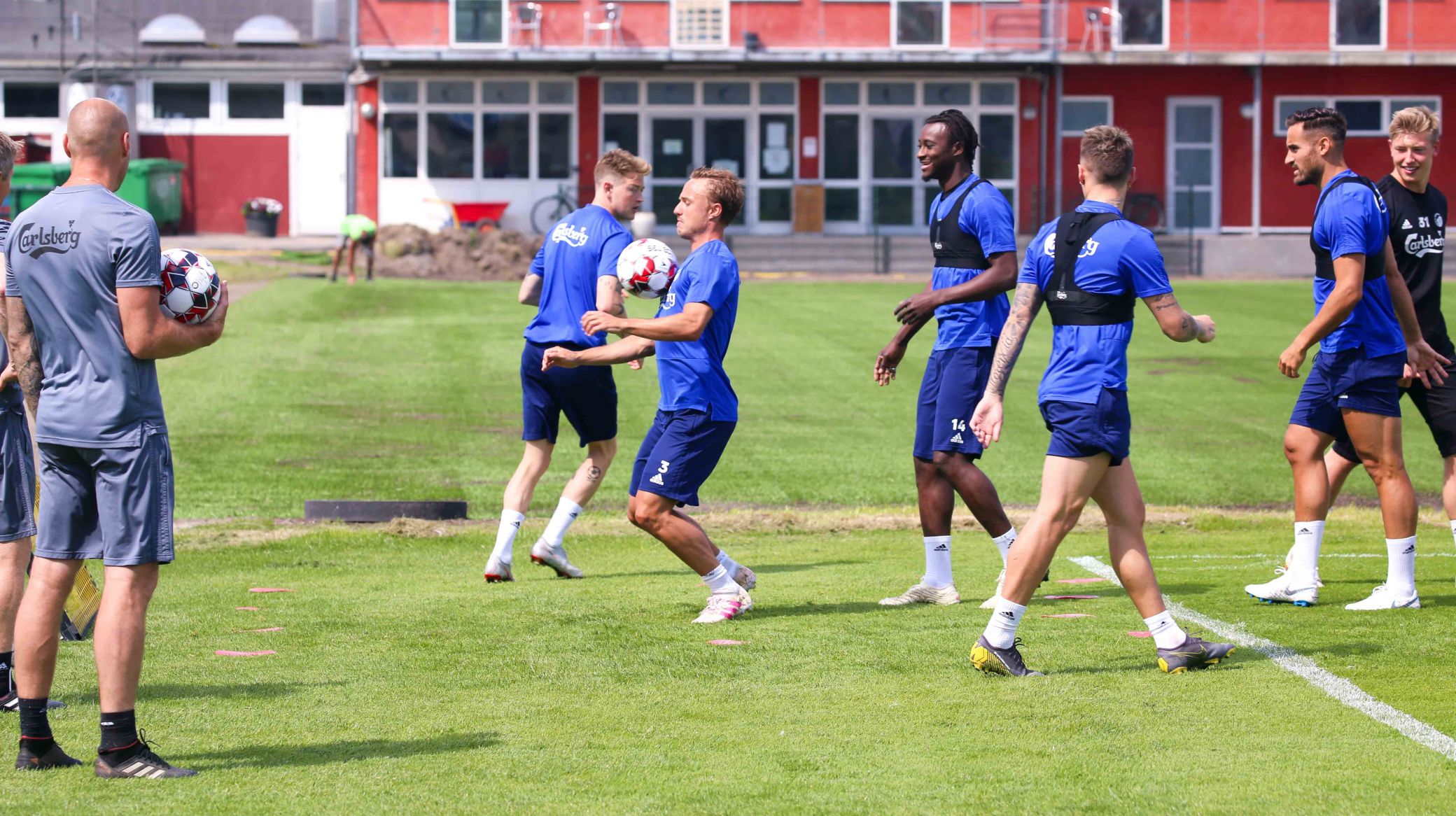
In the relentless world of elite sports, where fractions of a second and millimeters can be the difference between success and failure, marginal gains and innovative approaches are vital. Cullan Ball, physiotherapist at FC Copenhagen (Superliga) and former Wanderers FC (A-League) club physio, has leveraged VueMotion to pioneer a more intelligent and data-driven way of monitoring and improving athletes’ running mechanics, leading to better performance and reducing the risk of injury.
The Challenge: Beyond “What” and Understanding “How” Athletes Move
“It’s common to do a lot of analysis on what players produce in terms of physical output. But it’s much less common to analyse how they produce those results.”
Cullan found that traditional performance metrics focused heavily on outputs such as velocity, jump distance and force, but rarely addressed the underlying movement strategies that players used to generate those results. This gap was particularly clear in ACL and hamstring rehabilitation, where athletes often achieved similar test numbers but moved in fundamentally different ways.
The VueMotion Solution: Usable, Practical, Insightful
“VueMotion was easily the best tool when it came to usability. You can use it in the field - you’re not restricted by needing to be in a lab. It’s relatively inexpensive. It’s user friendly and most importantly it gave me the data I needed.”
Cullan evaluated multiple platforms, choosing VueMotion for its practical, on-field accessibility and cost-effectiveness compared to others. By partnering with Speedworks for advanced analysis, he could interpret complex running data without needing specialist coaching expertise.
Implementation: Screening, Baselines, and Data-Driven Rehab
“We screened the squad to look at their running patterns. If a player got injured during the season, we then had a baseline to help guide their rehab process and see if their movement patterns were back to normal.”
Cullan embedded group screenings and baseline testing into practice. Raw data from VueMotion, coupled with detailed Speedworks analysis, allowed for individual training interventions, targeted technique coaching, and evidence-based rehab progression.
Key Benefits
1. Focusing on the Mechanics to Prevent Injury
“There’s been a lot of studies done on hamstring injury and prevention, especially looking at strength. Unfortunately, the injury rate and burden associated with these injuries remains significant. If you had a bunch of players getting injured bench pressing, the first thing you’d look at is their bench press technique. I see hamstring injuries as being no different. If players have injured their hamstring running, then their running technique should be looked at as a potential cause of the problem.”
Rather than relying only on traditional strength protocols, Cullan looked deeper, identifying mechanical deficits that could predispose to injury—a paradigm shift in hamstring management and prevention strategy.
2. Supporting Faster, Smarter Return to Play
“With several players, when they appeared ready to return [from injury], their running analysis was still off. In some cases, it took another four or five weeks before their running patterns normalized. If you understand that they’re still finding their way and compensating, that can help guide rehab interventions, and then you can keep working on specifics even once they’re back playing.”
VueMotion enabled a nuanced rehab approach, returning athletes to play when safe, but continuing targeted work based on lab-grade biomechanics feedback. This went beyond subjective assessment, giving quantifiable milestones for safe return and ongoing intervention.
3. Driving Athlete Engagement and Buy-In
“The players love it. You’re looking at things that often don’t get looked at. When you can show them the changes, even better. It’s just another tool in the bag for the player. You're not trying to change the way they run, you’re just trying to give them more options to use in different match situations.”
Rehab drills and interventions derived from VueMotion data were seen as novel and relevant, driving player motivation to improve and actively participate in the process.
Practical Implementation Changes
- Rehabilitation protocols now include running technique-specific plyometric drills based on screening outcomes (“If I know they need to work on their switching, I reintroduce graded switching interventions as part of their rehab much earlier than I otherwise might have.”)
- Ongoing, individualized monitoring allows players to keep working on deficits even after return to play.
Takeaways for Professionals
VueMotion goes beyond measuring an athlete’s outputs to reveal the “how” of movement, providing actionable insight into the causes behind performance numbers. This enables practitioners to:
- Address root causes of inefficiency or injury, not just symptoms.
- Objectively monitor progress and readiness to return to play.
- Tailor drills and interventions to the unique biomechanical profiles of each athlete.
- Enhance player buy-in and motivation through clear, visual feedback.
As Cullan summarizes, “Being able to delve further into how those numbers are being produced is the beauty of VueMotion.”
Conclusion
By integrating VueMotion into elite practice, Cullan has moved his approach, and those of his athletes, beyond traditional output metrics, unlocking a new level of performance monitoring, rehab rigor, and injury prevention.
For practitioners seeking to push the boundaries of athlete management, VueMotion offers a pathway to smarter, more effective, and more individualized support for player health and performance.
Quotes and insights in this case study were provided by Cullan Ball, physiotherapist at FC Copenhagen, based on his professional experience working with VueMotion in elite soccer environments.